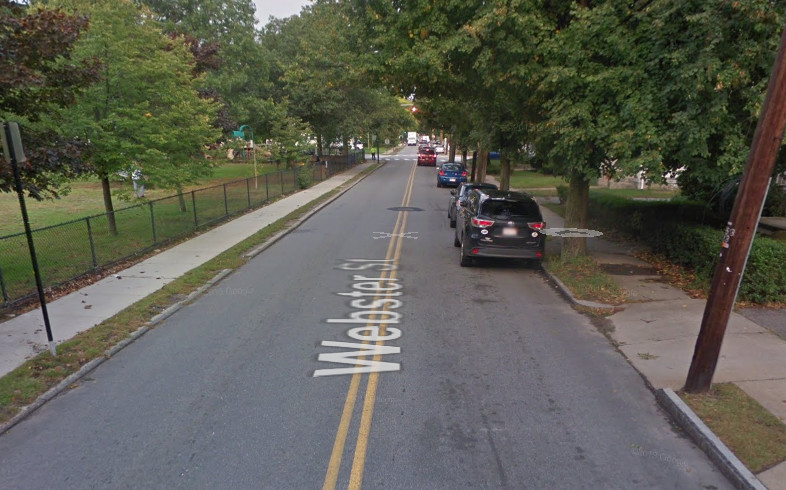
Width of street and loss of street parking are always going to be two of the primary reasons, if not THE primary reasons, that bike lanes can’t be installed.
Turns out there are a bunch of 24-26’ wide streets in Newton. (I could be wrong, but I thought there was a 24’ minimum in the Newton ordinances.)
That’s a wide street when there’s no or infrequent parking, but it’s not wide enough in most cases to add bike lanes, much less a protected bike facility. We could narrow the street (or selective parts of it) for traffic calming, but you’ll still not get a dedicated bike facility, plus you’ll pay a lot for moving curbs.
On a much smaller number of streets we might have the width to add a bike lane, but only if we pull parking. That’s a hard sell for any streets, particularly residential, that aren’t high volume bike routes. An extra indignity is that these streets may also not all have accessible sidewalks. If there’s a funding or a space tradeoff between sidewalks and a bike facility on a street, I think our legal and civil rights obligation is to provide accessibility first.
Protected lanes are even harder to pull off because they need minimum of about 12’ including a buffer. On streets with buses and cross streets, design gets quite complicated. Even trash pickup is tricky to figure out. Finally, the safety record for these kinds of protected facilities with cross streets is still up for debate. They feel safer, but the data is mixed.
That doesn’t mean we can’t do better. We can. We should. But it isn’t just a matter of the city refusing to. There are significant challenges in design and implementation. We also don’t have much of a grassroots organization to push such a thing through by popular will alone.
On the other hand, traffic calming benefits everyone, improves motorist behavior and the chance for survivability of peds and bicyclists in case of a crash, and can be implemented in many more locations than can bike facilities by themselves. We need for more resources for traffic calming in Newton. We also need more local organization, education, and rallying to get hazardous streets fixed.